Age-Performance Dynamics in Skateboarding
Project Information
- Category: Sports Analytics
- Client: FFRS
- Project date: 2023
- Project URL: github.com/albiche/dashboard_performance_tracker_skateboard
Project Overview
Conducted in collaboration with IRMES and the French Federation of Roller and Skateboarding (FFRS), this project aimed to uncover the relationship between age and performance in skateboarding—a sport with inherently subjective scoring systems. By designing advanced rating models, processing enriched datasets, and building dynamic visualization tools, it delivered actionable insights for coaches, athletes, and researchers.
Key Features & Methodologies
Data Cleaning & Enrichment
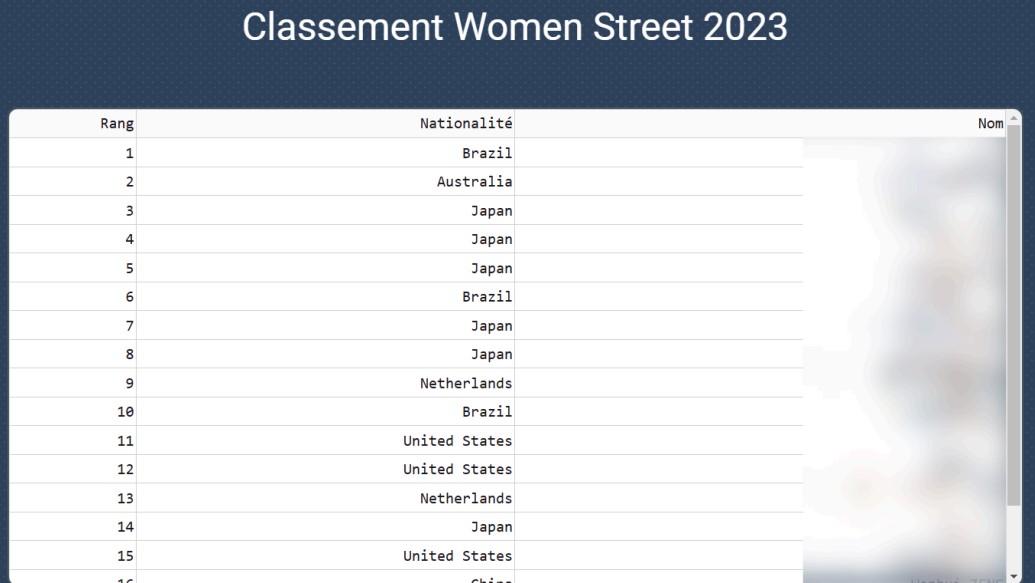
Processed FFRS competition data, cleaned duplicates, supplemented missing birthdates via web scraping, and enriched data with event types and locations.
Rank Ordered Logit Model
Implemented ROL modeling to transform subjective rankings into dynamic performance ratings that adjust over time and competition strength.
Age-Performance Analysis
Linked competition dates and birthdates to calculate age during events, enabling robust modeling of performance peaks and trends across demographics.
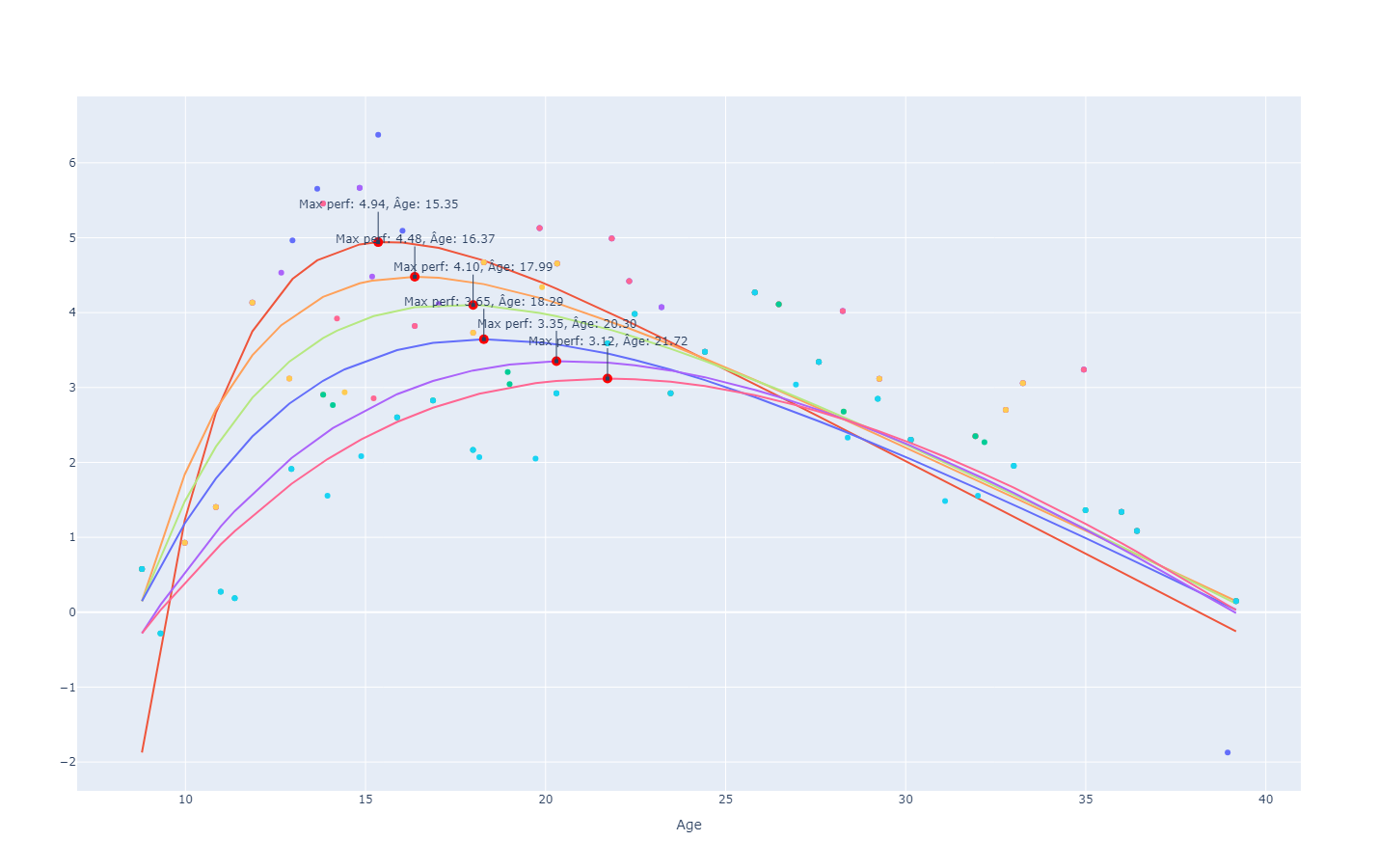
IMAP & Moore's Curve Modeling
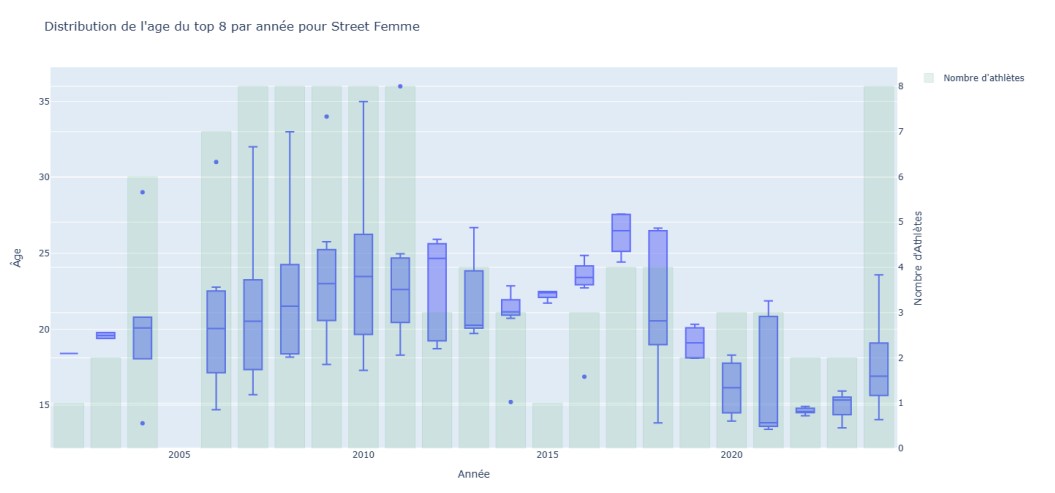
Applied IMAP and Moore's curves to visualize age-performance relationships, revealing peak ages and trends—especially the decline in peak age among female skateboarders.
Interactive Dashboards
Built visual tools with age vs. performance graphs, time-series ratings, gender/discipline filters, and rivalry insights to empower coaching decisions.
Predictive Modeling & Simulations
Developed tools to simulate competition outcomes, analyze ranking inflation, and study year-to-year evolution of athlete performance.
Results & Impact
The project successfully translated subjective competition results into a scalable, quantitative framework for evaluating performance trends in skateboarding. Coaches can now visualize athlete development over time, identify peak performance ages, and even strategize for competitions using predictive simulations. The work also highlighted ranking inflation challenges, especially among female athletes post-Olympic inclusion, informing future training and federation policy.
The interactive dashboard and analysis tools remain valuable resources for ongoing research, training design, and athlete development planning within the FFRS.